DRAFT - This document is a draft and has not been fully validated.
Spring top slab height & water quality
To guaranty the best possible water quality, all must be done to prevent external seepage to penetrate into the spring.
| Incorrect capping | |
|---|---|
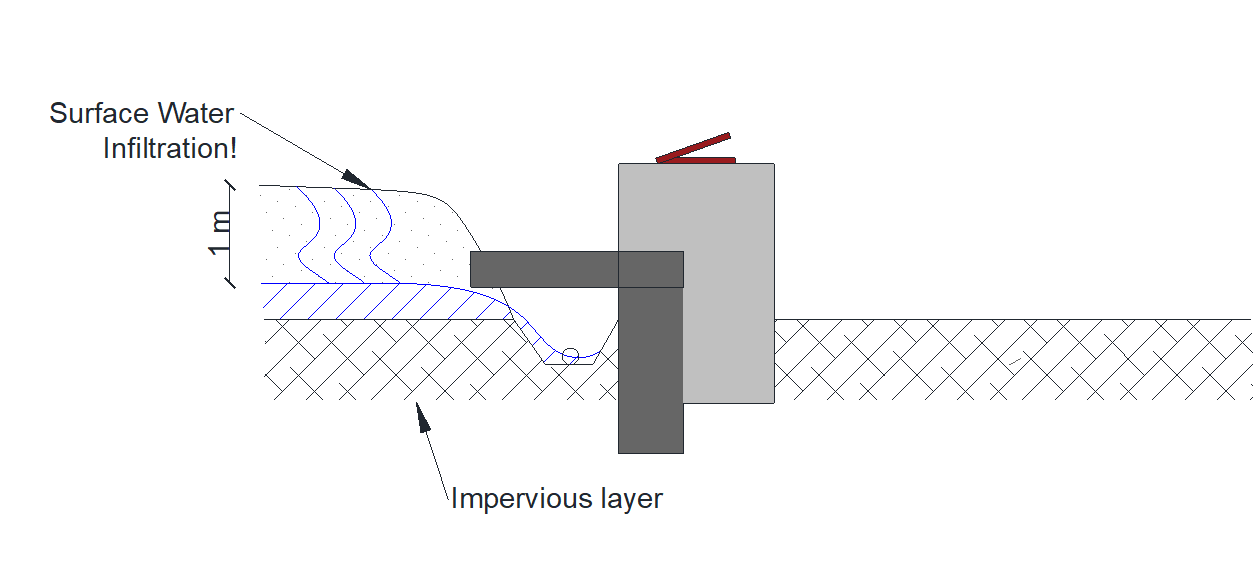 | 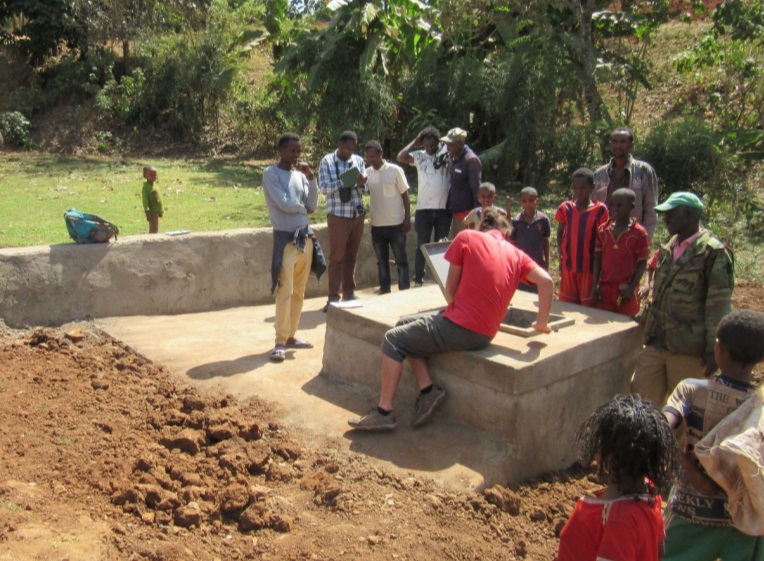 |
| The earth above the excavation is not sufficiently deep to insure a proper filtration | Here is Thomas spring, the excavation should have been continued up to the blue line |
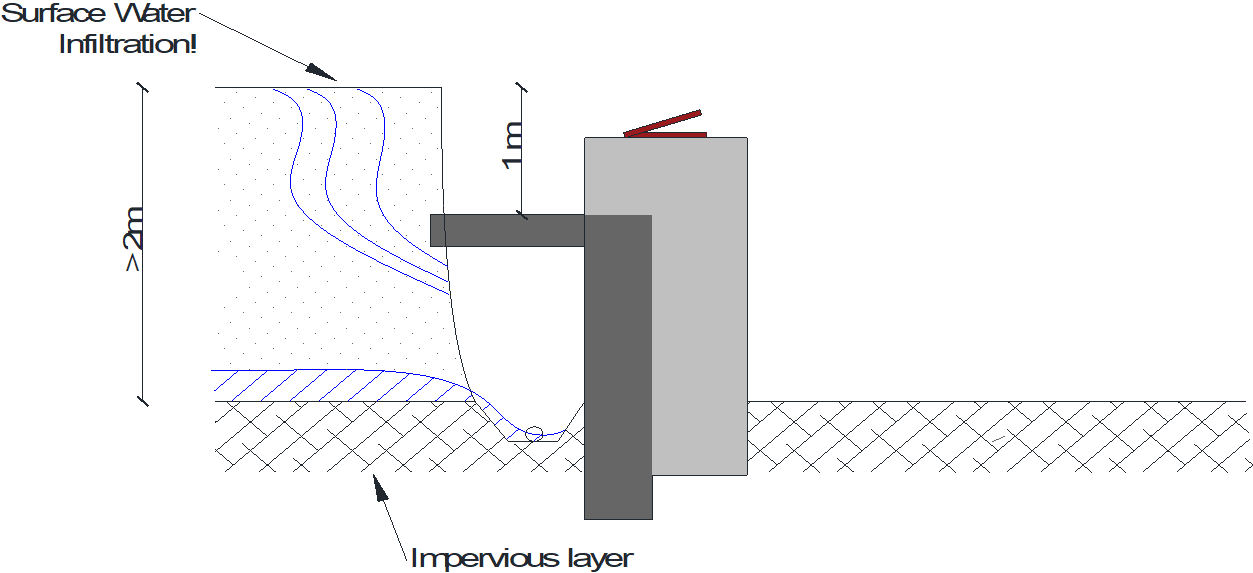 | 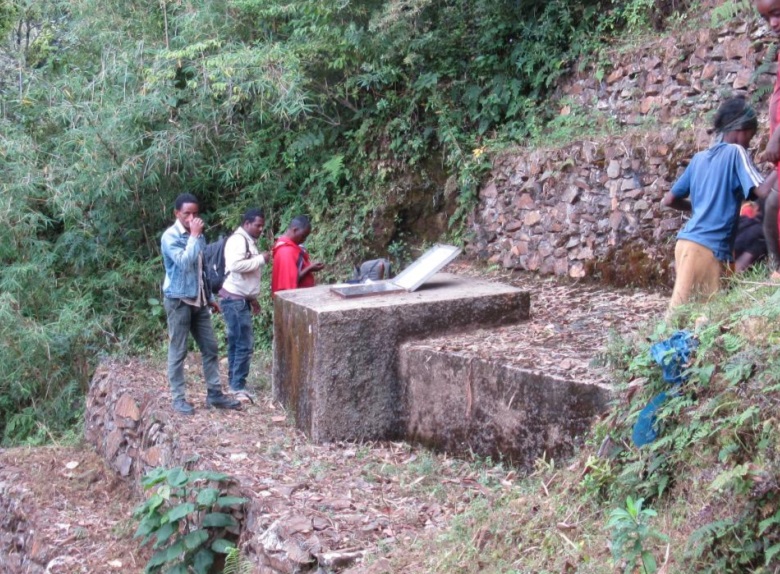 |
| The concrete cover is too high, surface water can enter inside the spring by seeping through a shallow earth cover | Here is Shuka spring, the spring is very deep (~3m) but the concrete cover is too high |
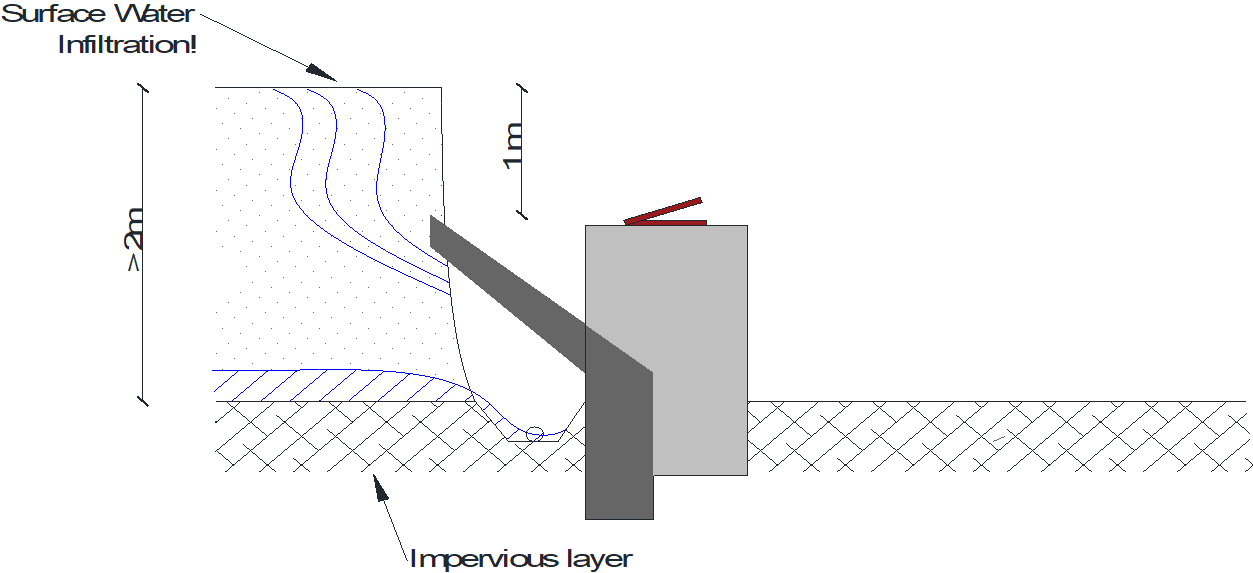 | 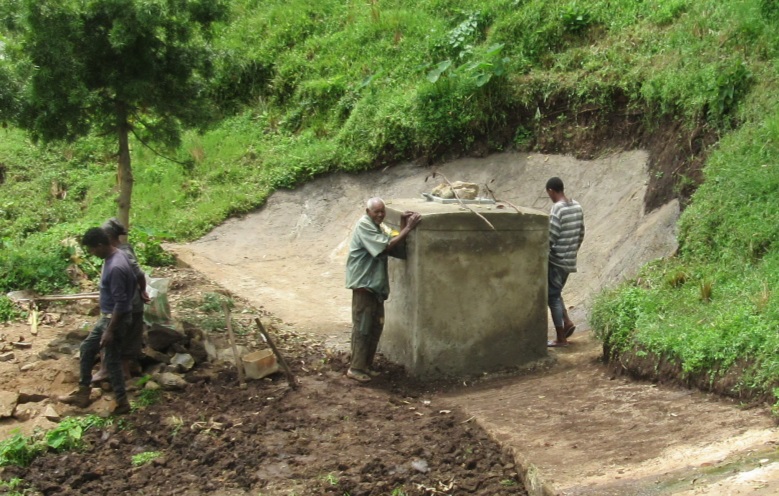 |
| This is the same problem as above; the concrete cover is too high at its intersection with the ground face. | Here is Ela 1 Spring, the excavation was almost enough, but the slab cover is way too steep |
| Retaining wall solution | |
|---|---|
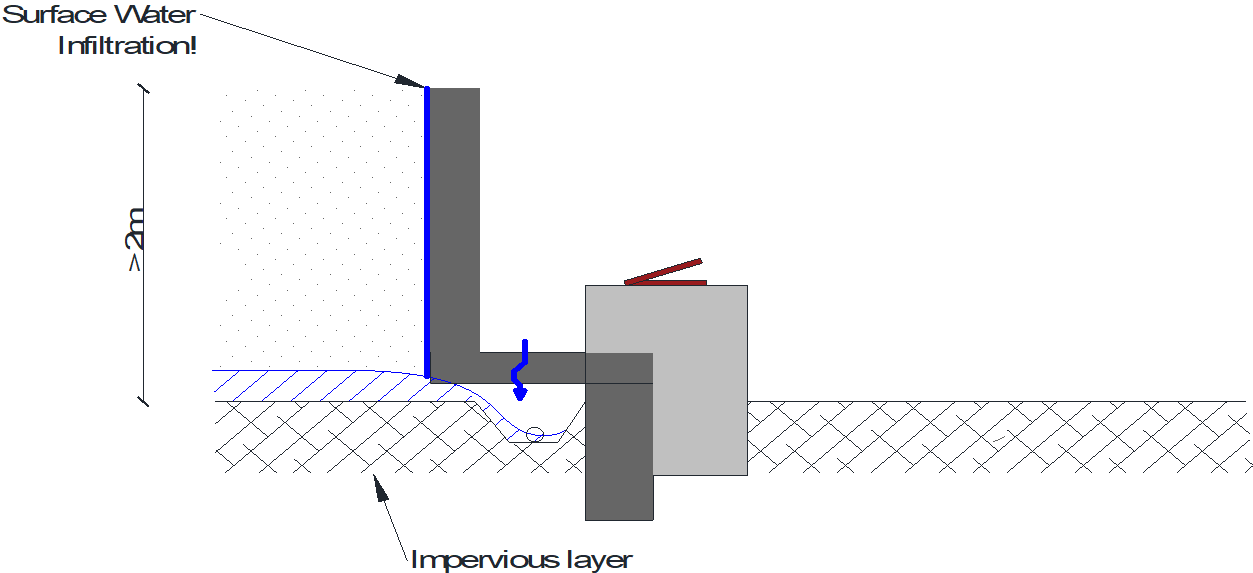 | 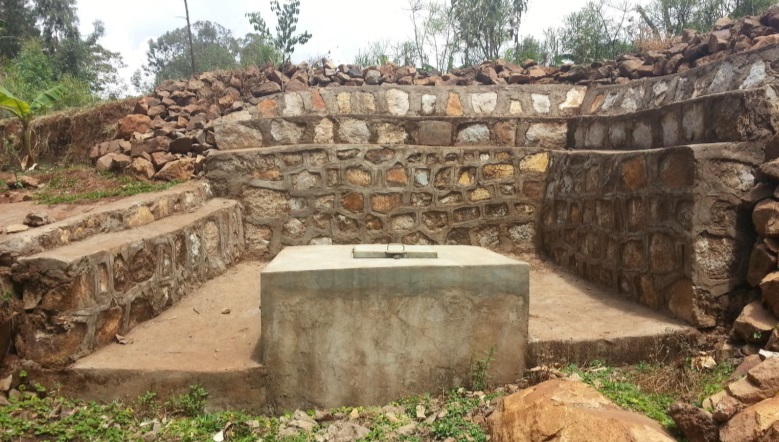 |
| This construction seems OK, but infiltration can still happen, as water can easily flow along the retaining wall (at wall /earth interface and it has no other escape that inside the spring | Here is Badjo Spring with high retaining wall but no water outlet (weep) |
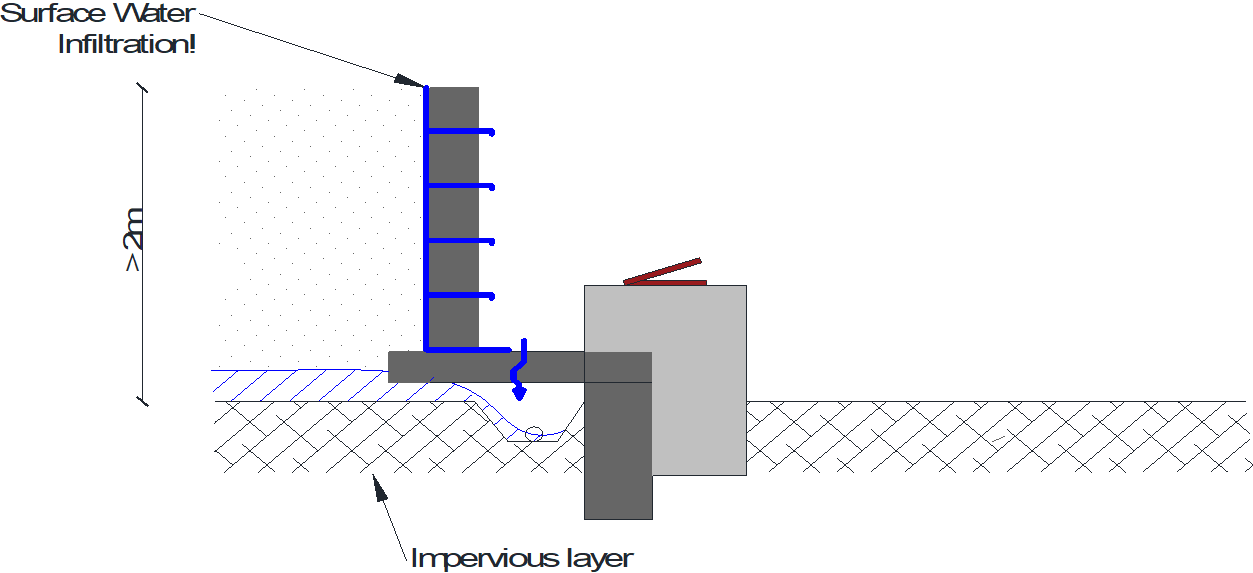 | This is an acceptable solution providing : 1) A deep cutting slab 2) Many weep holes :small pipes/holes that allows water to drain out of the retaining wall (these are mandatory for ALL retaining walls) The infiltrated water seeps through the weep hole and has no easy access to the spring. The remaining weakness is the slab cover, with age it might crack and let water inside. This solution remains acceptable if the next solution is not possible. |
| Back filled solution | |
|---|---|
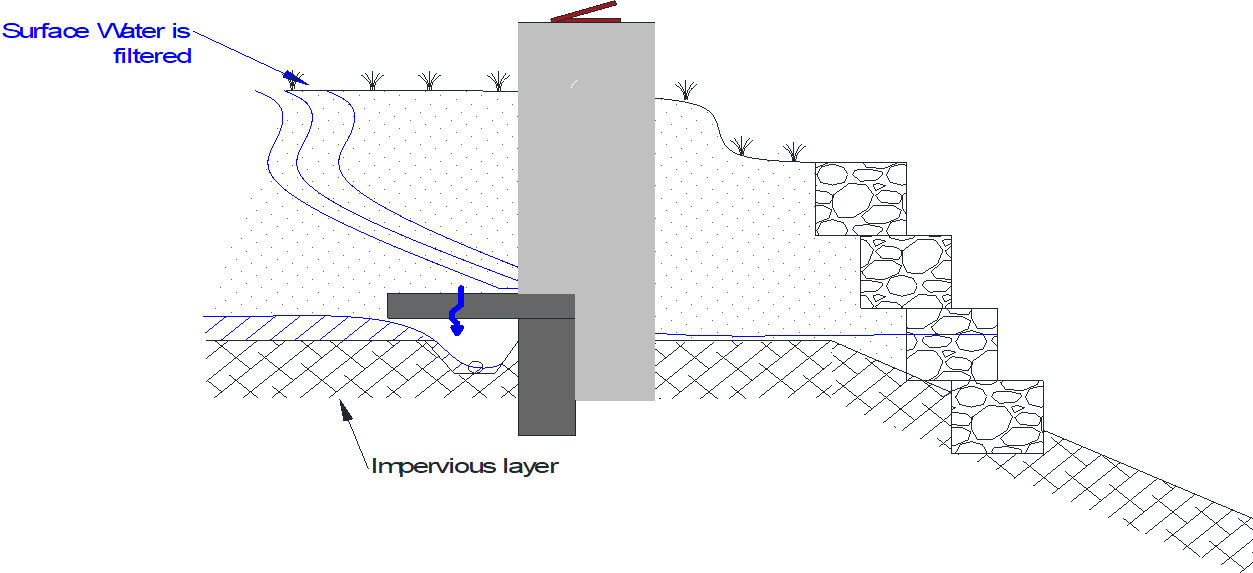 | 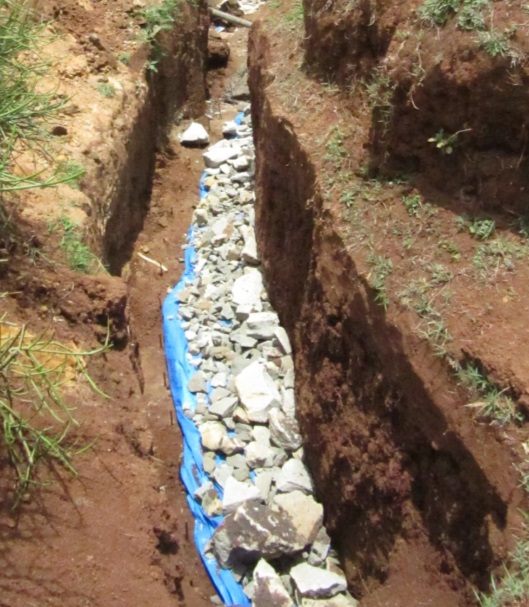 |
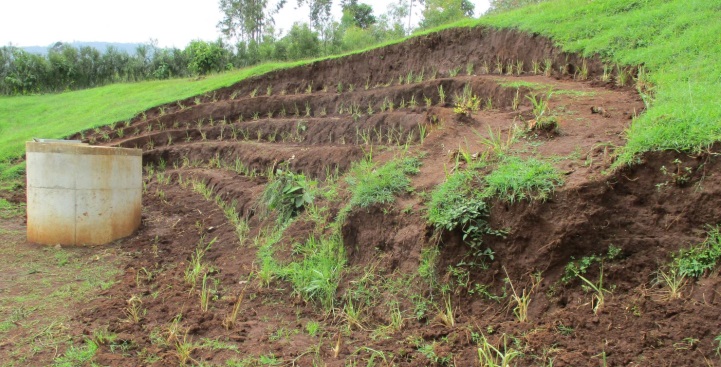 | This is probably the best method to protect a deep spring as it gives 2 layers of protection 1) The concrete cover (or plastic sheet) 2) 2 m of clayey soil to filter surface water. Even if there is a crack in the concrete cover, the water that might penetrate will be filtrated It is also much more economical than the retaining wall solution |